
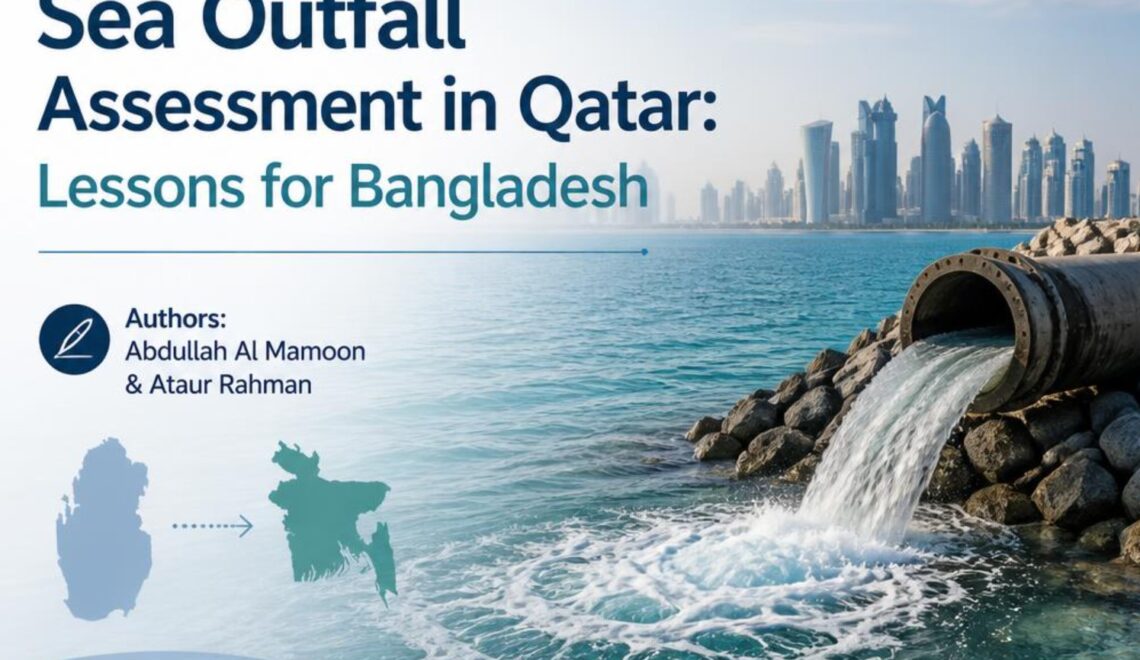
Authors: Abdullah Al Mamoon, Ataur Rahman
Abstract:
Pollution in coastal waters is a major concern in the Arabian Gulf countries. In Qatar, untreated water, mainly consisting of stormwater, is discharged into the Doha coastline via several surface/shoreline type outfalls. This may cause adverse impacts on the sea environment and the fragile ecosystem of the coastal zone in Qatar. The Ministry of Municipality and Environment (MME), Qatar, has carried out a comprehensive sea outfall study to identify existing outfalls and assess their impacts on planning, regulation, design and implementation of environmentally friendly outfall schemes. Direct discharge of large quantities of domestic and industrial wastewater, pesticides and agricultural chemicals into the rivers and the Bay of Bengal is a major concern in Bangladesh. The pollution levels in the Bay of Bengal affect fish and other living things. In addition to the biological and chemical pollutants, heavy metal pollution has also been reported in coastal and riverine waters of Bangladesh, which presents an enormous challenge for monitoring, environmental management and conservation efforts. The recommendations and outcomes of the Qatar sea outfall study could provide government stakeholders in Bangladesh with adequate information for sustainable coastal management and the proper tools for planning, maintenance, and monitoring of sea outfalls, as discussed in this paper.
Proc. 2nd International Conference on Water and Environmental Engineering (iCWEE2019) 19-22 Jan 2019, Dhaka, Bangladesh
ISBN: 978-0-6482681-1-6